The cries from the women at the windows of southern Beirut’s suburbs echo for the killing of Sayyid Hasan Nasrallah by Israel. For over 30 years, Nasrallah led Hezbollah, a figure revered to the point of being seen by many as an ‘eternal’ presence.
“The Sayyid isn’t dead. He continues to resist with us against Israel,” says Bushra, a resident of Ghobeiri, a neighborhood ravaged by Israeli bombings on Beirut. Lebanon remains largely in shock, though there have been celebrations by some groups in Tripoli and northern suburbs of the capital, where people hailed Nasrallah’s death.
“I’ve long protested against Hezbollah and the entire Lebanese political class,” says Samir, a local civil society figure. “I’m not a supporter of the party, nor have I ever voted for it. But, like many Lebanese, I stand for resistance against Israel. The news of his death is devastating.”
While cries filled the air in the southern suburbs, a heavy silence fell over most of Beirut and other cities across the country. “All the shops are closed. There’s no one around,” says Ruba from Badaro, a neighborhood not far from Chiyah, a Shia district bombed by Israel in the afternoon. Amid the thundering sounds of Israeli airstrikes, many throughout the night and into the morning hoped the news of Nasrallah’s death—leader since 1992—would be disproved by a last-minute appearance on television.
“The world we knew is gone, it’s over. I was born and raised with the image of Nasrallah, who, despite Israel’s crimes, gave us strength and a sense of direction,” says Nada, who was only ten years old during the 2006 Hezbollah-Israel war.
Nabil, glued to his TV, watches Al-Manar, Hezbollah’s TV channel, which has been broadcasting live from the sites of the Israeli bombings on the party’s headquarters. Nabil recounts how Al-Manar eventually started broadcasting from an improvised studio, increasingly interrupting live coverage with archive footage. “Hezbollah took about 18 hours to publicly announce Nasrallah’s death,” Nabil points out, highlighting the “chaos that now reigns within the movement. We can feel this chaos, and it frightens us.”
In Beirut, whispers of a possible new “civil war,” a specter never fully erased since the conflict that devastated Lebanon from 1975 to 1990, are growing. The Lebanese army, primarily funded by the United States and never truly used to defend the country from Israeli attacks, was deployed in the morning to guard the U.S. embassy north of Beirut. By afternoon, troops were stationed in key areas of the capital, sites of past clashes between rival political and religious factions. Some observers suggest the armed forces may take on a greater role in “maintaining order and stability” in such a critical moment.
But all eyes remain fixed on Israel, Hezbollah, and Iran. “Before us are only grim scenarios,” says Samir. “Either a devastating regional war, an unconditional surrender of Hezbollah, or an agreement between Iran and the United States. In any case, we Lebanese will once again be treated as bargaining chips.” (ANSA).
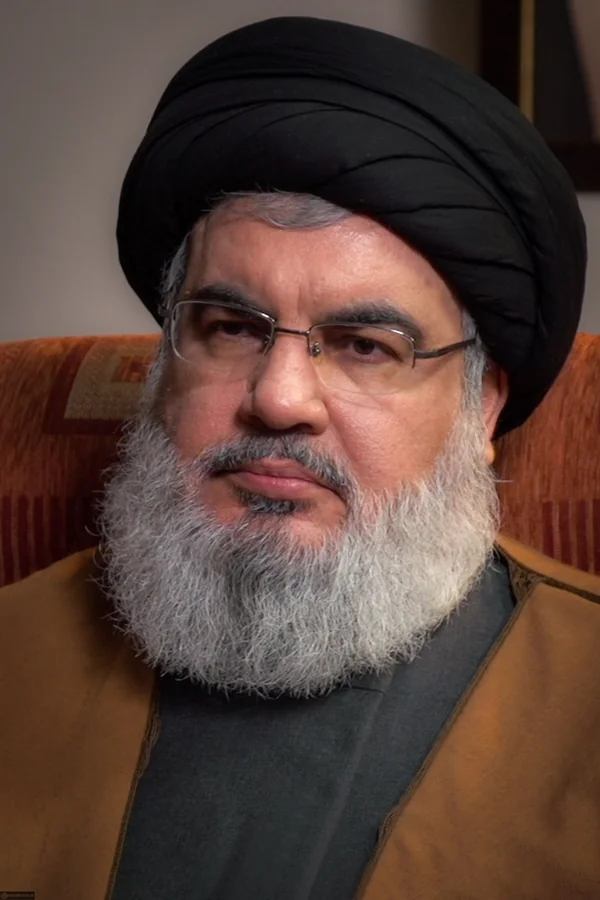
Hasan Nasrallah, the Hezbollah leader reportedly killed by the IDF in yesterday’s bombing of Beirut, built his life and political career around one core mission: armed resistance to Israel’s presence in Lebanon and the region.
This mission eventually positioned him as the only Arab Shiite leader capable of standing on equal footing with Iran’s supreme leader, Ali Khamenei. Nasrallah’s unquestioned authority came primarily from his noble lineage within Shiism: he belonged to the sadat, the descendants of the Prophet Muhammad.
His black turban symbolized this direct link to the Prophet. As a sayyid (pl. sadat), his words and actions were considered inherently righteous, revered by followers and fighters alike.
Forced into secrecy for over two decades, Nasrallah was born in 1960 in a refugee camp on Beirut’s outskirts.
His father, a migrant from Lebanon’s impoverished south, ran a fruit stand in the Burj Hammud slums. The ninth of ten children, Nasrallah fled Beirut at 15 when Lebanon’s civil war broke out in 1975.
In Tyre, where his family took refuge, Nasrallah joined the newly formed Amal movement, the first political force advocating for the rights of Lebanon’s marginalized Shiite community.
In 1978, Israel launched its first invasion of Lebanon. Fully aware of his responsibilities, the young Nasrallah studied at key Shiite religious and political centers: first in Najaf, Iraq, then in Qom, Iran.
After being expelled from Saddam Hussein’s Iraq and briefly returning to Lebanon, Nasrallah was in Qom when Israel mounted its massive 1982 invasion of southern Lebanon, reaching Beirut.
Revolutionary Iran, led by Ruhollah Khomeini, welcomed Nasrallah and other emerging Lebanese Shiite leaders. Returning from Qom, Nasrallah assumed a key political role within Amal in the Bekaa Valley.
During this time, however, a faction of Amal—backed by Iran’s Revolutionary Guards—split off to form what would become Hezbollah, an Islamic resistance movement against Israel.
The turbulent 1980s culminated in Nasrallah’s rise to leadership in 1992 at the age of 32, following the Israeli assassination of his predecessor, Abbas al-Musawi.
Since then, Nasrallah’s political ascent has been marked by local and regional successes: Israel’s military withdrawal in 2000, Hezbollah’s defiance in the 2006 war, its dominance in Lebanon after the 2008 clashes, and its intervention in Syria from 2012 onwards, taking part in the killing of many Syrian civilians.
This trajectory reached a critical juncture on October 8, when Nasrallah publicly declared Hezbollah and the broader Axis of Resistance’s decision to support Hamas in Gaza. “The battle may be long, but we will prevail,” Nasrallah proclaimed in his last televised address on September 19.
If his death is confirmed, questions arise about who could possibly fill his shoes—not only as Hezbollah’s leader but also as the region’s sole figure capable of raising the ‘finger of resistance’ against Israel.
[update and revision of an article for ANSA written on the evening of September 27, 2024]
La parabola personale e politica di Hasan Nasrallah, il leader di Hezbollah che l’Idf rivendica aver ucciso nel bombardamento di ieri su Beirut, è stata quasi sin dall’inizio della sua movimentata esistenza segnata dalla necessità di resistere con le armi alla presenza violenta di Israele in Libano e nella regione: tanto da farlo diventare, col passare del tempo, l’unica figura apicale dello sciismo arabo a potersi confrontare alla pari con Ali Khamenei, l’incontrastato leader iraniano.
L’indiscussa autorità di Nasrallah è derivata, prima di tutto, dalla sua appartenenza di sangue alla casta nobile dello sciismo: i sadat, i discendenti del profeta. Il suo turbante nero è infatti quello delle famiglie che si dicono legate direttamente a Maometto. In quanto sayyid (pl. sadat), le sue parole e azioni sono per definizione corrette, tenute in altissima considerazione da parte di seguaci e combattenti.
Costretto da almeno vent’anni alla più totale clandestinità, Hasan Nasrallah nasce nel 1960 in un campo profughi alla periferia di Beirut. Suo padre, emigrato dal poverissimo sud del Libano, aveva un banco di frutta nella favela di Burj Hammud. Nono di dieci figli, Nasrallah è costretto all’età di 15 anni a lasciare Beirut per lo scoppio della guerra civile libanese (1975-90).
Nel porto meridionale di Tiro, dove la famiglia si era rifugiata, aderisce al neonato movimento Amal, prima entità politica intenzionata a promuovere i diritti della emarginata comunità sciita libanese.
Nel 1978 Israele comincia la prima invasione del Libano. Consapevole della responsabilità, il giovane Nasrallah frequenta i più importanti centri dello sciismo religioso e politico regionale: prima a Najaf, città santa in Iraq, e poi a Qom, altra città santa sciita in Iran.
Dopo esser stato espulso dall’Iraq di Saddam Hussein e una breve parentesi in Libano, Nasrallah si trova a Qom quando Israele invade massicciamente il sud del Libano nel 1982, raggiungendo Beirut.
L’Iran rivoluzionario di Ruhollah Khomeini accoglie Nasrallah e altri futuri leader sciiti libanesi. Tornato da Qom, Nasrallah riceve un incarico politico di rilievo, come esponente della sezione di Amal nella valle della Bekaa.
Ma sono gli anni in cui una costola del movimento si stacca per formare, col decisivo sostegno dei pasdaran iraniani, quello che poi diventerà il Partito di Dio, Hezbollah, votato a una resistenza islamica contro Israele.
I turbolenti anni ’80 giungono al termine quando Nasrallah, rientrato da un nuovo viaggio in Iran, appena 32enne si trova ad assumere nel 1992 l’incarico di guidare Hezbollah. E di raccogliere la pesante autorità del suo predecessore, Abbas al Musawi, ucciso da Israele in quello stesso anno.
Da allora la parabola politica è ascendente e costellata di successi locali e regionali: il ritiro militare israeliano del 2000, la vittoria politica con la guerra del 2006, il dominio imposto in Libano dopo gli scontri del 2008, l’intervento in Siria dal 2012.
Fino all’8 ottobre scorso, quando Nasrallah in persona annuncia la decisione di Hezbollah e di tutto l’Asse della Resistenza di appoggiare Hamas a Gaza. “La battaglia potrà durare ancora a lungo, ma vinceremo”, aveva detto Nasrallah alla fine del suo ultimo discorso televisivo, il 19 settembre scorso.
Se la sua morte dovesse essere confermata ci si interroga su chi potrà prendere il suo posto, non soltanto come leader di Hezbollah, ma come unico leader della regione capace di tenere alzato il dito della resistenza contro Israele.
[aggiornamento e rielaborazione di un articolo scritto per l’Ansa la sera del 27 settembre 2024]
(This is a translation into English of my commentary for the Italian newspaper Domani, published on August 27, 2024)
Credit: Lorenzo Trombetta, 2024
BEIRUT – AUG 27 – The latest exchange of fire between Israel and Hezbollah, which occurred in the early hours of last Sunday, and the subsequent statements by Israeli Prime Minister Benjamin Netanyahu and the leader of the Lebanese Shiite movement Hezbollah, Hasan Nasrallah, an ally of Iran and Hamas, have confirmed the validity of the power equation that has underpinned Middle Eastern balances for decades, not just since October 7.
In other words: waging war for declared purposes of “security” or “resistance,” prolonging it over time without escalating it into a full-scale conflict, and constantly evoking the specter of a decisive and existential final battle to annihilate the enemy. With this formula, as ancient as it is current and proven, Netanyahu’s government, Iran, and its regional allies—primarily Hezbollah and Hamas—have been trying for nearly a year to maintain a dominant position in their respective political contexts.
From the perspective of these elites, who only appear to be rivals and different from each other but are all reactionary and rely on popular support fueled by the permanent external threat, the post-October 7 Middle Eastern scenario has been, and continues to be, a life-saving elixir for political and institutional longevity.
For those who represent these powers, the dystopian scenario of a devastating regional war that would involve the entire Eastern Mediterranean, Mesopotamia, and the Red Sea, bringing destruction and death to civilians in the main cities of the Middle East—including Tel Aviv, Jerusalem, and Beirut—must be incessantly represented in public discourse but avoided at all costs.
Because an armed conflict of this kind would not only bring desolation to civilian populations; it would also have a potentially destabilizing impact on the very power structures in Iran, Israel, and Lebanon, with profound repercussions throughout the area.
The so-called security and stability of the Middle East, a formula present for decades in almost all statements from Western and regional chancelleries, is, first and foremost, the security and stability of these dominant, exclusive, and repressive political systems.
It is the status quo based on the tacitly consensual division of territories and resources in an area historically at the center of global interests, extending from the Levant to the Indian Ocean, from the Strait of Hormuz to the Suez Canal, passing through the Bab al-Mandab strait between Yemen and the Horn of Africa.
The total Middle Eastern war, so eagerly anticipated throughout August by the media around the world, in the now established collective imagination, must be truly explosive and widespread to make people forget the bland and disappointing prelude of last spring: when, for the first time in history, Iran launched ballistic missiles and drones against Israel, causing only one casualty, the young Amina, a 7-year-old girl from the Bedouin Palestinian community of the Negev.
Yet, the media hysteria of that mid-April night concealed a craving among many observers and ordinary people: to finally witness the end of a world that many dislike but serves only a few—namely, that Middle Eastern elite oligarchy (including Netanyahu) that, on the one hand, fuels a public discourse steeped in nationalist, ethnic, and sectarian identity politics; and, on the other, manages the complex system of resource extraction and exclusive distribution of privileges (not rights) to their respective subjects (not citizens).
The narrative hysteria of April has returned to dominate the media, political, and diplomatic discourse in recent weeks: soon forgotten the spiral of tension in April, political rhetoric has resumed generating images of a full-scale conflict, leading to a series of concrete actions on the ground: pushing, for example, airlines to cancel flights to Beirut and triggering a sequence of alerts issued by embassies, urging their nationals to leave Lebanon quickly.
The message was the same as in April. But in the general oblivion, for many, there was the news: the war—the definitive and sensational one, like in the most clichéd disaster movies—was at the gates. Now, after the last significant exchange of fire between Hezbollah and Israel, the sequence first skyrocketed, spiraling upwards, with sensational headlines and feverish expectations. And then it collapsed into the current boring apparent normality, made of a conflict still bloody and violent (about 150 civilians killed in Lebanon, about 30 in Israel, more than 100,000 displaced in Lebanon, about 90,000 in Israel), awaiting the next more exciting escalation.
Thus, while various public opinions are more or less consciously dragged along the rollercoaster of alarmism, the power structures remain dominant: not only do they buy time—a precious resource in politics and negotiations—but they also ensure a relative stability in popular support. In some cases, they manage to strengthen their positions. If the end of the world is just around the corner, the individual and collective horizon disappears. Only the here and now exists. The need to get through the day. With the eternal fear of the enemy’s bombardment.
It was not like this before last October 7, when, for reasons related to different local contexts, the ruling system in Iran, Hamas in Gaza, Hezbollah in Lebanon, and Netanyahu in Israel had to contend with declines in support and genuine political crises, triggered by more or less extensive and prolonged popular protests.
And this in the context of a broader challenge to the status quo by segments of Middle Eastern societies: from 2005 to 2023, from Beirut to Tehran, passing through Tel Aviv, Cairo, Jerusalem, Tunis, Gaza, Baghdad, Sana’a, Damascus, Aleppo, Mosul, Manama, Muscat, Aden, Tripoli, Rabat, the squares have mobilized to demand socio-economic and political rights. The elites have responded, as they always do in these cases: repression, a strategy of tension, but also, and above all, updating that reactionary narrative matrix called upon to offer a sense and perspective: we are at war against an enemy who wants to annihilate us; it is a state of exception that leaves no room, for now, for revising the social contract.
Last Sunday, Netanyahu said that the “preventive attack” on Hezbollah shortly before dawn “is not the end of the story.” Nasrallah, for his part, said that the attack on Israel is “only the first phase of the response” to the Israeli raid on July 31 in Beirut. Two shamans called upon to utter the magical formula of power: the war continues, we are here to defend you.
So, with the summer drawing to a close, professional dystopists are already gathering scattered content to give substance to the increasingly insistent predictions that the long-awaited open Middle Eastern conflict will occur between October and November, just before the American presidential elections. The horizon expands, at least in appearance, but only to the benefit of those in power and who intend to stay there.
The boundary grows ever more fine, much like the Blue Line that marks off Lebanon from Israel, blurring the lines between the imminent threat of outright war between Hezbollah and Israel and the ongoing daily clashes.
These have intensified over the past six months, featuring an escalation in fire exchanges between the Upper Galilee and the south of Lebanon.
In this volatile setting, over 10,000 UN peacekeepers, with a strong contingent of a thousand Italians, stand on the cusp of getting entangled in a widespread conflict. Daily, they must seek refuge multiple times in the bunkers at their bases, which dot the entire frontline.
“The escalation of violence near the Blue Line deeply concerns us,” Andrea Tenenti, spokesperson for the UN mission in Lebanon since 1978, tells me.
Recent days have seen a spike in Israeli bombings met with rocket and missile fire from Hezbollah and other armed factions. “Such escalations have led to a significant toll on civilian lives and the destruction of homes and means of livelihood,” Tenenti shares from the UNIFIL base in Naqura, a stone’s throw from the Blue Line.
During the interview, the sound of an Israeli artillery shell bursts in through the window. To the east of the coastal road, a plume of smoke ascends from an Israeli strike on a vehicle carrying a Hezbollah member.
Hezbollah fighters and their allied groups are seamlessly part of the local community. While they launch rockets from the wilderness, their weapons storage and logistics often lie within populated areas.
The remnants of a café-restaurant, obliterated two days prior by an Israeli drone’s missile, are starkly visible on the hill above the UN mission’s headquarters, where the road winds out of sight.
Among those lost were civilian members of the political and armed movement Amal, allied with Hezbollah, and a renowned fisherman from Naqura, Issam M. Along with his wife Ola and their two children, he was cherished by the village.
In Tyre, the regional capital 90 km south of Beirut, the community recently mourned the passing of fisherman Issam and other “martyrs” from Naqura. The Khodr Mosque became a place of gathering where dignitaries, local civil and military officials, and residents came together to offer their condolences.
“We’re deeply worried about our immediate and future prospects; the economy here is shattered, just like the homes in our villages,” says Hasan Dabuk, president of the Tyre Municipalities Union.
The villages along the Blue Line seem to bear the scars of an earthquake: entire neighborhoods demolished, rubble everywhere, and fields of olive, banana, and tobacco devastated by phosphorus and conventional bombs from Israel.
“We’ve lost entire seasons of harvest,” Dabuk laments. “While tens of thousands have fled northward, many have chosen to stay or return,” he adds, highlighting the resilience of Southern Lebanon communities.
ANSA-FOCUS/Libanesi al confine tra distruzione e campi bruciati ‘Abbiamo perso tutto’. Hezbollah comincia a risarcire in dollari
(di Lorenzo Trombetta) (ANSA) – ROMA, 27 NOV – Tra case distrutte e campi agricoli bruciati dai bombardamenti israeliani si aggirano le sparute famiglie dei circa 60mia libanesi sfollati dalle zone del sud del Libano più vicine alla linea del fronte tra Hezbollah e Israele.
Solo una minima parte di chi ha abbandonato temporaneamente le proprie case da metà ottobre ha finora approfittato della tregua del conflitto mediorientale.
Ma l’estensione di altri due giorni, fino a mercoledì incluso, della pausa dei combattimenti consentirà forse a un numero crescente di civili libanesi di fare i conti con gli ingenti danni causati da sette settimane di intensi scambi di fuoco giornalieri tra il Partito di Dio e lo Stato ebraico.
Sul terreno, gli ostacoli al ritorno non sono soltanto i danni infrastrutturali e il rischio dell’improvvisa ripresa dei combattimenti, ma anche il pericolo posto dagli ordigni inesplosi israeliani seminati un po’ ovunque sui terreni del sud del Libano.
“Abbiamo perso un’intera stagione agricola”, afferma Mustafa, coltivatore di tabacco nella zona di Naqura, sulla costa mediterranea. Gli fanno eco numerosi altri coltivatori di olive nella piana di Marjouyoun. “I nostri campi sono stati bruciati dalle bombe israeliane, alcune erano bombe al fosforo”, prosegue Mustafa, evocando quanto già denunciato più volte nelle scorse settimane da organizzazioni umanitarie internazionali e da media libanesi: l’uso da parte di Israele delle bombe al fosforo bianco, vietate in aree abitate da civili.
AP Photo/Hussein Malla
E mentre da più parti ci si lamenta, come da decenni accade in Libano, della cronica assenza delle autorità statali centrali, i vertici di Hezbollah hanno già cominciato a distribuire risarcimenti in dollari contanti ad alcune famiglie colpite nelle località vicine alla linea blu di demarcazione con Israele.
Il movimento armato sciita filo-iraniano assicura che distribuirà gli aiuti a tutte le famiglie che hanno visto le loro case danneggiate e distrutte e i loro raccolti agricoli perduti, senza discriminare tra comunità sciite, sunnite e cristiane del sud del Libano. Hezbollah fa sapere che ha già cominciato a risarcire: la priorità sarà data alle famiglie che sono rimaste nelle case danneggiate.
In un secondo momento, affermano responsabili del Partito di Dio ai media libanesi, si verseranno i risarcimenti a chi non abita per il momento nelle zone disastrate.
Ai primi di novembre si erano levate alcune critiche nei confronti di autorità cristiane di Beirut che avevano portato aiuti soltanto a quei pochi villaggi a maggioranza cristiana della linea del fronte. “Hezbollah ci tiene a far vedere che aiuta tutti gli abitanti del sud, senza distinzioni”, afferma Ahmad, abitante di Dhahira, località sunnita sul fronte e una delle cittadine maggiormente colpite dai bombardamenti israeliani.
Citato dai media libanesi, il sindaco di Dhahira ha riferito di essere a conoscenza dell’intenzione di Hezbollah di risarcire gli abitanti delle zone danneggiate già prima della tregua. “Sono stato informato da Hezbollah quando gli scontri erano cominciati”. (ANSA).